
Neighborhood Watch behavior on the street
Appearance: A huge exposed eye carried by four long legs with hand-like feet. It is easy to spot in the open, but the important signal is often its heavy footfall before it rounds into the street.
Behaviour: Neighborhood Watch follows a repeating Level 9 street patrol and becomes faster than the player when it sees someone. A house, bush line, or other solid break in sight is useful; trying to win a road sprint is not.
Threat scale: 5/5 — the score groups directory entries; the written threat label above remains the player-facing assessment.
Observed in: 1 documented route.
A Level 9 street route that survives a patrol

A terminal is only useful if the crossing is planned
The temptation is to dash for the next glowing terminal as soon as the door opens. In practice, the reliable run chooses the next house first and treats the terminal as the reward for a safe crossing.
This changes the pace without slowing the route. A short wait behind a wall is cheaper than resetting the entire street loop after a desperate sprint.
The Level 9 Suburbs and Lab walkthrough lays out the terminal order and the houses that make each street crossing practical.
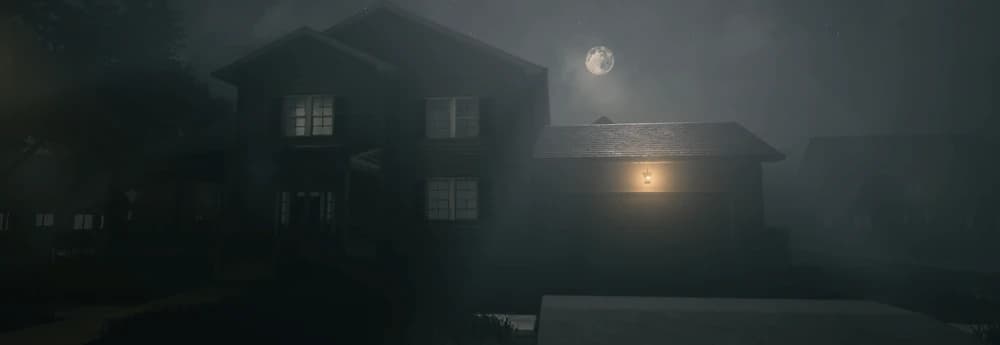
The street reset and the house reset are not the same thing
Neighborhood Watch gives the team a reason to enter the nearest house, while a Wretch can give the same house a reason to keep moving. Reading those as two separate decisions prevents the classic trap of fleeing the road into a dead end.
When the group agrees on a room or exit before opening the door, the terminal route stays controlled even when both threats are active.
The Level 9 Suburbs and Lab walkthrough also explains the house route, including why a street escape can still need an interior plan.
When the footsteps get close
Choose the next terminal house and the fallback house before opening the door; every crossing should have an endpoint rather than becoming an open-road sprint.
Recognition signal
Heavy footsteps or the eye entering a street are enough to pause. You do not need a close look to know that the crossing has stopped being safe.
Best immediate response
Stay inside or move behind a solid wall, call the patrol direction, and wait for a route that ends at one specific house.
Reset the encounter
Break its view with a house or solid cover, let the footfalls move away, then resume from the nearest planned terminal instead of doubling back into the same lane.
Neighborhood Watch multiplayer tips
The player leaving a house first calls the next destination and the patrol direction. Keep the group moving to one house; splitting toward separate terminals can leave one pair caught outside while another pair opens a door for a Wretch.
What ends runs: Treating a closed front door as the entire safety plan. A Level 9 house can also contain a Wretch, so the group still needs a room, exit, or hide in mind.
Where the patrol changes the route
These are route-level encounter notes, not a promise that an entity will always stand in one fixed spot.
Level 9 streets and intersections
Its repeating patrol turns every road crossing into a timing decision; house interiors are the reset points between terminal checks.
How to lose Neighborhood Watch safely
Do not test whether you can outrun it on the street. Break sight with the closest house or solid cover, wait until the footsteps have moved away, and resume from the next chosen terminal rather than wandering back onto the same patrol lane.
Street-crossing checks for solo and co-op
Use these as a short reset checklist. They describe what we change before, during, and after the encounter—not a script to follow blindly.
Before the door opens
Solo: Pick the house that gives you the next terminal or a clear piece of cover. If the lane is not visible, wait a few seconds and listen again.
Co-op: Call the destination before anyone runs. A group that chooses different houses gives the patrol two targets and no shared reset.
When the patrol is in the street
Solo: Do not try to beat it along the road. Stay behind the nearest wall and cross only when the eye-facing lane has moved away.
Co-op: One player watches the patrol direction while the rest hold the doorway. Leave together only when the caller names the next house.
At a Wretch house
Solo: Do not abandon the street plan just because the door is open. Enter with a room and retreat line in mind, then leave through the next planned crossing.
Co-op: Keep one player on the door and one on the interior call. The team should not all chase a Wretch deeper into a house while Neighborhood Watch owns the road outside.
Sightlines, houses, and the terminal route
Treat the streets as crossings between safe decisions, not as an exploration space. Listen before leaving each house, choose the next terminal house, then cross only when the patrol lane is readable. If it acquires the group, the nearest interior route is the reset.
Use footsteps as the early warning
The body is huge, but the sound often tells you to stop before the eye reaches the intersection. That is the useful moment to choose cover.
Cross toward a named house
“Over there” creates a split. Naming one house gives every player the same line and leaves the team together when the terminal check ends.
Keep the Wretch problem separate
Neighborhood Watch controls the street while Wretches complicate interiors. Do not solve one by walking blindly into the other.
Neighborhood Watch in Escape the Backrooms
Before leaving the next house
- Which house is the next destination?
- Where does the patrol face?
- If the house is unsafe, which wall or room resets the group?
Neighborhood Watch questions
Quick answers for the point where a broad rule needs a concrete next action.
Can I outrun Neighborhood Watch on the road?+
Do not rely on it. A house or solid sight break is the dependable answer; road sprints leave no margin when it has already seen you.
Are houses always safe from the patrol?+
They are useful for breaking the street sightline, but a house can have its own Wretch problem. Decide where you will move once inside.
What should a co-op team call?+
Patrol direction, one destination house, and the fallback. Those three calls are more helpful than everyone describing the model.